Stepping outside the back door this afternoon I was hit by the sound of a murmuration of starlings in the trees by the pond. They were so noisy that the guinea fowl just stood dumbstruck.
The break in the wet weather gave us a chance to get the wheat drilled this morning. It's been a bit stop, go for drilling this year.
The ground is too wet to drill wheat this week, but the oilseed rape crop is growing well in The Ley. The crop is proving a little too tempting for the pigeons in the top corner of the field and the rabbits from the Country Park are enjoying a small patch at the other end of the field. But apart from that, it's looking good. At the moment.
The sun is shining, but the air is cooler and summer coming to a close. The oilseed rape has been drilled and the plants are emerging so we're on the watch for pigeons that swoop in to feast on the young green plants. In the other fields, the golden yellow of the stubble has given way to brown as the soil is prepared for the next wheat crop.
Over the past few days, Lakes Field has been ploughed
Now that the hay bales have been carted away from the field (to be used as horse feed), we can see what's been lurking in the long grass, including lots of little frogs like this one.
The muck and straw removed from the stables is heaped up ready to be spread in the autumn. Over the last few days spiders have covered the top with cobwebs,
The grass in Little Forest was cut on Saturday. Here you can see the wonderfully named mower going through the crop.
With cutters on the front and back, it makes a wide cut through the long grass.
The green grass lays spread out across the field, left to dry in the sun.
The grass is turned a couple of times, bringing the wet grass underneath to the top and spreading it out . The sun shines and the grass dries out to become hay. By Wednesday the grass had dried out - you can see how it's changed from grass green to much lighter green - and the hay put into rows.
As soon as the hay has been rowed up, the tractor and baler come in and drive along the rows. The baler picks up the hay, compresses it into a bale, ties it up and shoots the bale out the back.
By the end of the day we have a few fields of hay bales, ready to cart away.
There's a bit of film here showing the rowing up and baling - it's not very good quality because we have such a slow broadband connection that it takes hours to upload anything of higher definition and my camerawork is a bit jumpy.
We could do with some sunshine and warmth to ripen the crops; the current prediction is for harvest to be at least a week later than normal.
oilseed rape 18th July
The oilseed rape was desiccated earlier this week to stop it growing and help even up maturity across the crop ...
wheat 5th July
wheat 18th July
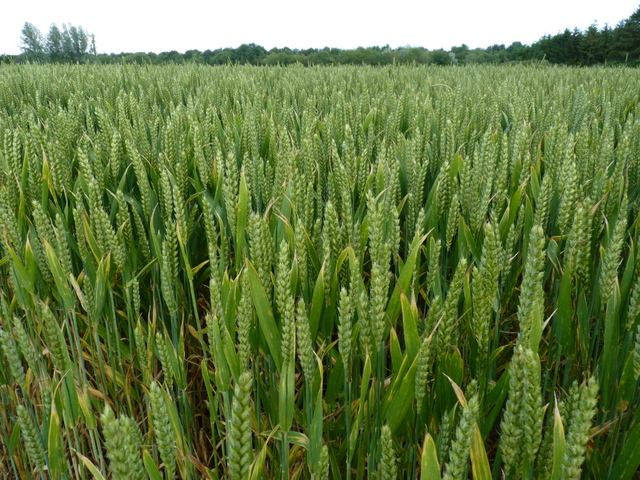
and the wheat is slowly turning colour.
Goodwrights Livery have taken over the running of the livery yard at the farm. Not only do they look very professional in their new shirts, but they've been busy painting the stables and tack room so that the livery yard is looking as smart as they do. It's good to see horses grazing in the paddocks again, though there's so much grass at the moment that they can't keep up. There are still a couple of stables available on the yard, so if you're looking for a livery yard for your horse, contact us and we'll pass your details on to Goodwrights Livery.
You can see how our oilseed rape plants have grown over the last few months. The plants now stand nearly five foot high, the yellow flowers have died off and the seeds in the pods are beginning to develop.
This is one of the seedpods taken from the plants above
When the seedpod is split open, it reveals the tiny immature seeds inside.
Although we call this field the Pig Paddock, there aren't pigs in here all the time so I
think we should rename it Home Pasture as this was one of the names given to
this field in the nineteenth century and it’s roughly the area that the
original farmhouse is believed to have stood. In this corner we have ox-eye daisies
that have crept from the verge alongside the chase.
At the other end of the field, Beth has planted raspberries to
be used in Slamseys Raspberry Gin; the first fruit are just beginning to turn
colour.
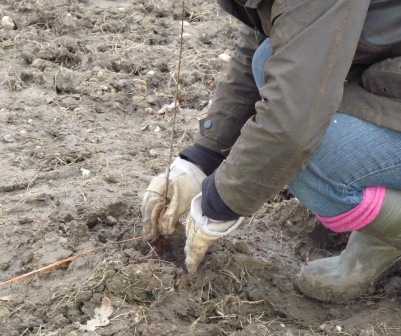
planting blackthorn February 2012
blackthorn hedge July 2012
The blackthorn hedge that was planted earlier this year will separate the pigs from the raspberries
and as well as forming a stockproof barrier, the sloes (which are the fruit of
the blackthorn) will be picked for sloe gin.
Beth Wheaton has developed and produced the fruit gins and we're very excited to have a new venture on the farm. So far Slamseys Drinks has bottled Raspberry Gin and Blackberry Gin, with Sloe Gin due to be bottled later this month. Although some of the
raspberries had to be picked elsewhere last year, all the sloes and
blackberries were picked from the hedgerows on the farm and the fruit then
steeped in London Gin.
If you’re interested in buying some of this delicious
gin, Slamseys Drinks will be selling at the Tendring Show and also Great Garnetts Farmers Market on 14th July. They'll also be at the Essex Food & Drink Festival at Cressing Temple on 21st and 22nd July.
Find out more on the Slamseys Drinks Facebook page.
We've had 70mm in a good, steady rain over the last few days. The land drains are feeding water into ditches that have been dry for months and the ponds are filling.
The bridleway from Great Forest leads into Big Blackley
field and out onto Blackley Lane (which was sometimes known as Dragon Lane in the past). It’s a sad fact that rural crime is on the
increase; all field entrances on roads are now blocked by bollards such as these or
by padlocked gates and large pieces of farm machinery to stop people driving onto the
fields to dump unwanted vehicles, joy ride across the crop, set up illegal camps or to break into buildings and farmyards to steal.
public footpath signs
Big Blackley field borders
Blackley Lane up to Gypsy Corner where people park in the gateway to canoodle, flytip (builders' rubble, garden rubbish, house rubbish ...), partake in illegal substances, let their dogs out or just sit in their cars in the sunshine while they eat their lunch and enjoy the countryside. But when you've dodged the rubbish, skirted around the piece of farm machinery (see above) and stepped carefully through the dog mess you have a choice of footpaths to follow.
footpath between the two Blackley fields
One footpath heads off towards Willows Green and the other cuts down between the two fields, with Far Blackley on the left and Big Blackley on the right, heading towards Gardeners Field.
behind the trees
Halfway down the footpath a little copse of
trees hides a dark pond that is beginning to dry out.
blossom
The blackthorn hedges around the field are covered in blossom this month and we're hoping they'll have a good crop of sloes this autumn.